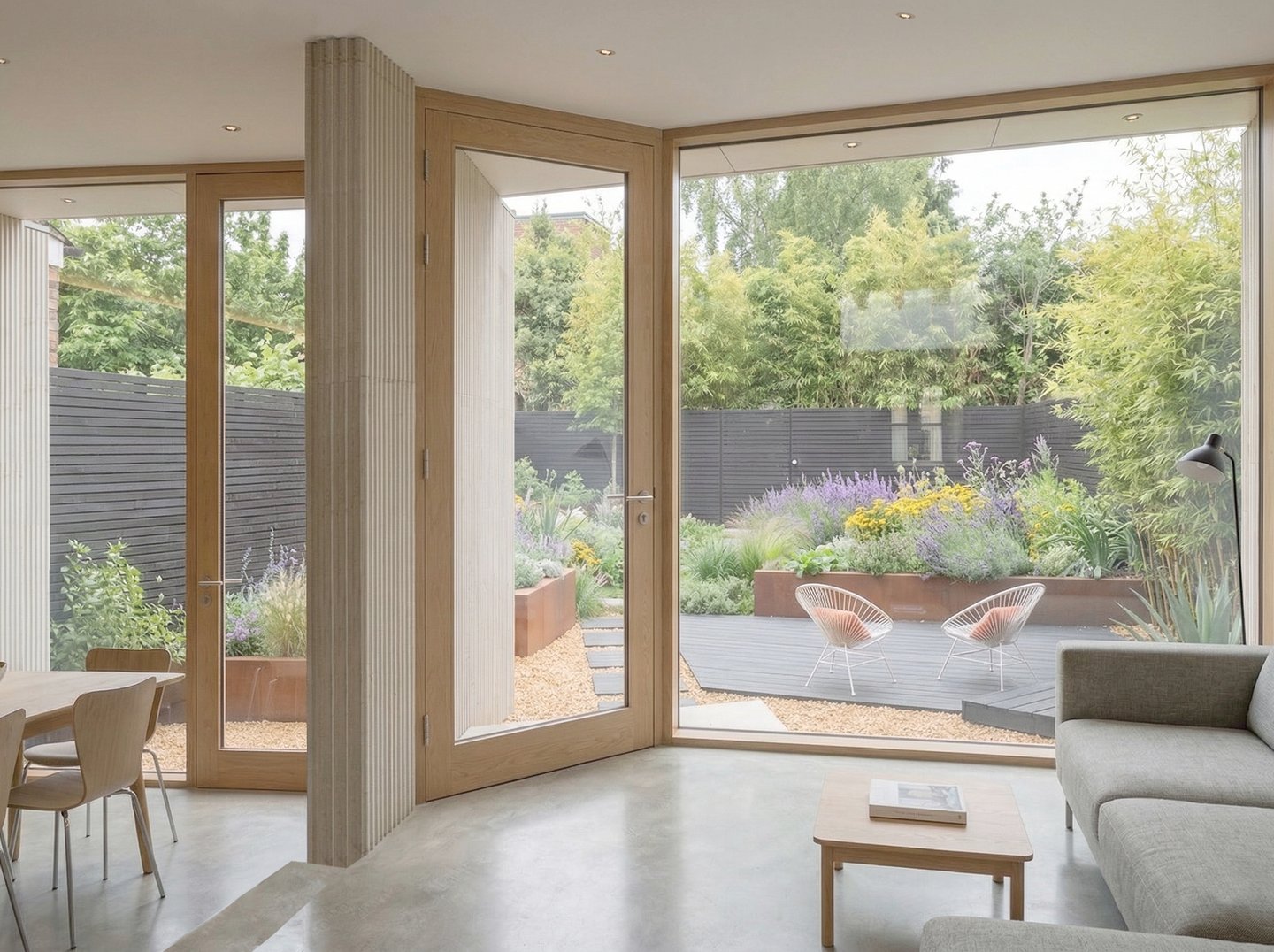
The three main walls gently angle and pivot around large glazed planes, to break the standard 'four-wall box' feeling of a room, and make the internal footprint feel significantly larger and more expansive than it is and negotiate site privacy.
These three walls are finished with a tactile, fluted clay "skin." Its vertical ridges catch the light at different angles throughout the day, giving the solid extension a sense of movement and fine-grain detail that echoes the garden's textures. The wall in the centre extends inside, to separate the formal dining area from the lounge, keeping the entire space feeling airy and full of light. A deep, crisp roof overhang allows the large glass doors to remain open during a light summer rain, while also shading the interior from harsh midday sun to maintain an optimal temperature.
Because the space is 'broken' into angled sections, the eye is forced to look sideways across the site. This creates multiple corner views and a panoramic sense of space.

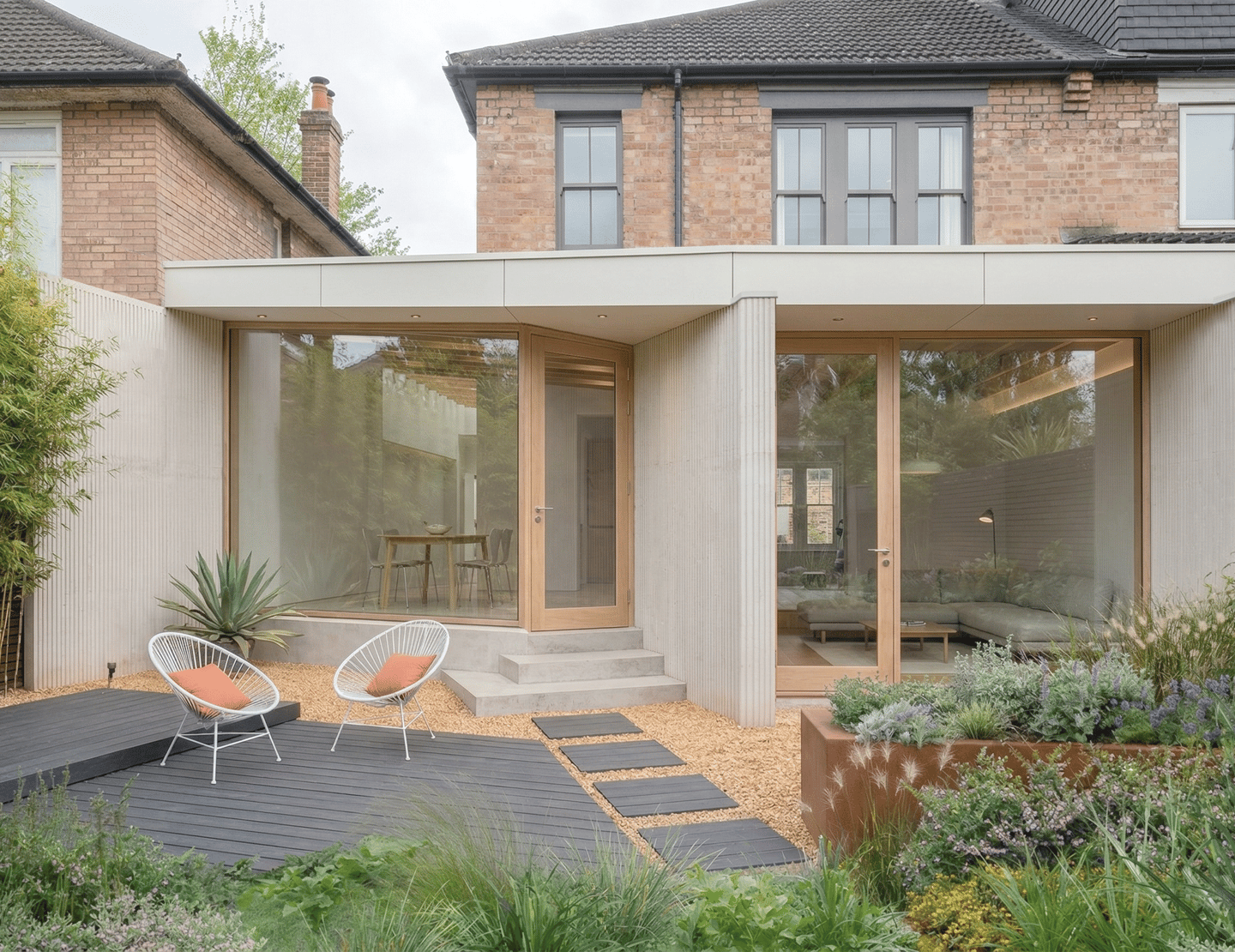
This design reimagines the wrap around extension of a 1920's end of terrace as a series of interlocking planes and geometries that slide past one another bringing the garden to the interior.
the panorama house